Improvements in artificial intelligence integration and child safety were highlighted in the keynote video kicking off Apple’s Worldwide Developers Conference on Monday.
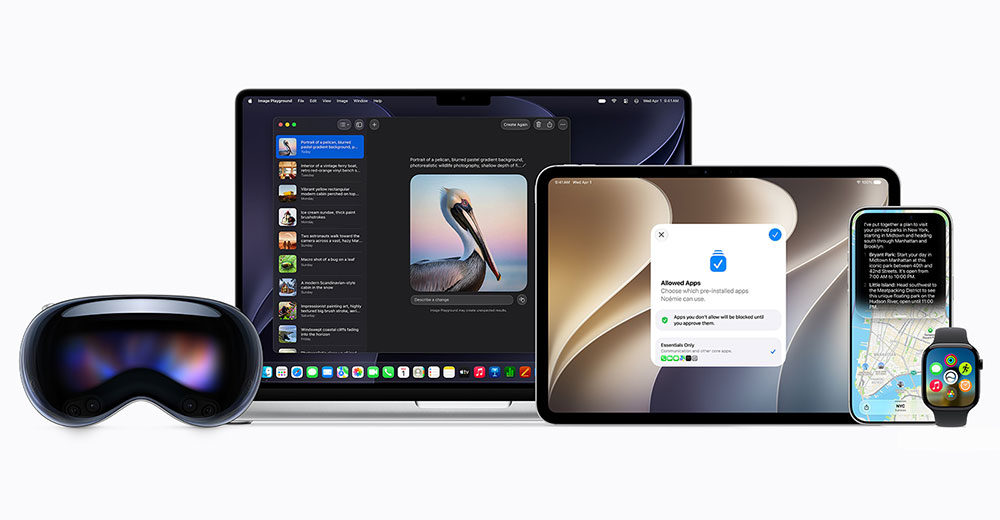
At the event, Apple demonstrated AI features designed to work across iOS, iPadOS, macOS, and its core applications.
“Where Apple’s getting it right, and the rest of the market isn’t, is that they’re looping in all of their applications,” observed Jim McGregor, founder and principal analyst with Tirias Research, a high-tech research and advisory firm in Phoenix.
“If you tried to do some of the things that Apple showed on your Android phone, you can’t do them,” he told TechNewsWorld. “You’d have to build a custom agent to be able to do them on any other platform.”
“Once again, Apple is showing that they are focused on the user experience and the value of controlling the entire ecosystem,” he continued.
Stopgap Partner?
To expand its AI capabilities, Apple has partnered with Google and its Gemini large language model. “They’re calling it Apple Intelligence, but it’s heavily leveraging Gemini,” McGregor said.
“It’s not without precedent, but it is unusual to see Apple do that,” observed Rob Enderle, president and principal analyst at the Enderle Group, an advisory services firm in Bend, Ore.
“Historically, Apple has not been all that great working through major third parties like this,” he told TechNewsWorld.
“We’ll see how it works long term,” he continued. “It’s undoubtedly a stopgap measure because they’re a vertically integrated vendor, so it must irk them to have to use somebody else’s AI platform.”
“They’re also working with Claude and ChatGPT, so it’s not like they’re tied to Gemini,” he added, “but most of what they announced at the keynote was Gemini-based, if not all of it.”
The Power of Integration
What differentiates Apple’s AI strategy is its ability to extend experiences across its platforms, from the iPhone to the Vision Pro, Enderle explained.
“That experience integrates across all of those platforms,” he said. “You could start having a conversation with your iPhone, get into the office, continue the conversation on your Mac, put on the Vision Pro, and wander around and continue the conversation that way as well.”
“It makes for a much more comprehensive use of AI across the entire Apple product ecosystem,” he continued. “It’s a very powerful integration story across not only applications, but all their hardware.”
“That’s the way the Apple model works,” he noted. “They control everything, so they can make this kind of integration.”
“Going from Windows to Android isn’t going to be anywhere near as seamless because of the variety of vendors on the platforms,” he added, “so Apple is showing their strength here by showing that they can move across their platforms more easily.”
Catching Up on AI Promises
In the past, Apple has taken a very OS-by-OS approach to new features, explained Ross Rubin, the principal analyst with Reticle Research, a consumer technology advisory firm in New York City.
“You know, here’s what’s new in iOS. Here’s what’s new in macOS,” he told TechNewsWorld. “Then there would be less attention given to the watch. And then in alternating years or every couple of years, something new on the TV front.”
“But this looks like a turning point in terms of the level of focus Apple is giving to these capabilities,” he said.
At this WWDC, Apple appears to be delivering on some of its earlier AI promises. “They’re catching up with a lot of the promises they made initially about Siri and Apple Intelligence,” Anshel Sag, a senior analyst at Moor Insights & Strategy, a technology analyst and advisory firm based in Austin, Texas, told TechNewsWorld.
He praised Apple’s use of spatial technologies in its Vision Pro to enhance photos. “It’s really an interesting, cool, and exciting feature that I think people can really get excited about,” he said, “because everybody wishes they could have reframed a photo from time to time.”
“I think Apple was exceedingly cautious,” added Mark N. Vena, president and principal analyst at SmartTech Research in Las Vegas.
“When you flash back two years, when they made a lot of promises about Siri and Apple Intelligence, and then they disappointed people,” he told TechNewsWorld. “They acknowledged that at the last WWDC.”
Vena also pointed out that even though the keynote was pre-recorded, there was latency during some of the demos. “I give Apple credit because they could have very easily fixed that in editing and shown that it was an instantaneous experience,” he said. “But they decided not to do that because I think they want to set an expectation level that there is going to be a bit of latency when you deploy it.”
“They wanted to convey a realistic experience, set expectations properly,” he added.
A New Siri
Some of those promises are fulfilled in the new Siri, which includes personal context understanding, application actions, on-screen awareness, image understanding, and access to broad world knowledge.
“I am still disappointed that they’re leveraging heavily on getting textual responses instead of audio responses from Siri,” McGregor said, “but at least it’s leveraging all the applications and giving you responses across platforms, across your applications, that’s very positive.”
“Siri AI is the one Apple absolutely had to nail,” Vena added. “If Apple can finally make Siri feel conversational, personal, and useful across the iPhone, iPad, Mac, and Apple Watch, it moves from being a punchline to becoming the AI assistant mainstream users might actually trust.”
He noted that “visual intelligence” is a feature people will readily understand. “Point your iPhone at food, a bill, a product, or even something on your Mac screen, and Siri can help you make sense of it right away,” he explained.
He argued that the new Siri app is Apple admitting that AI needs memory to be useful. “Being able to go back to prior Siri conversations across devices makes the whole thing feel less like a one-off command and more like a real assistant that follows you around,” he said.
New Parental Controls
Apple also announced new tools that allow parents to manage what kids can see, who they can talk to, and when they have access, as well as a website that explains all the safety features and answers common questions, including how to get started.
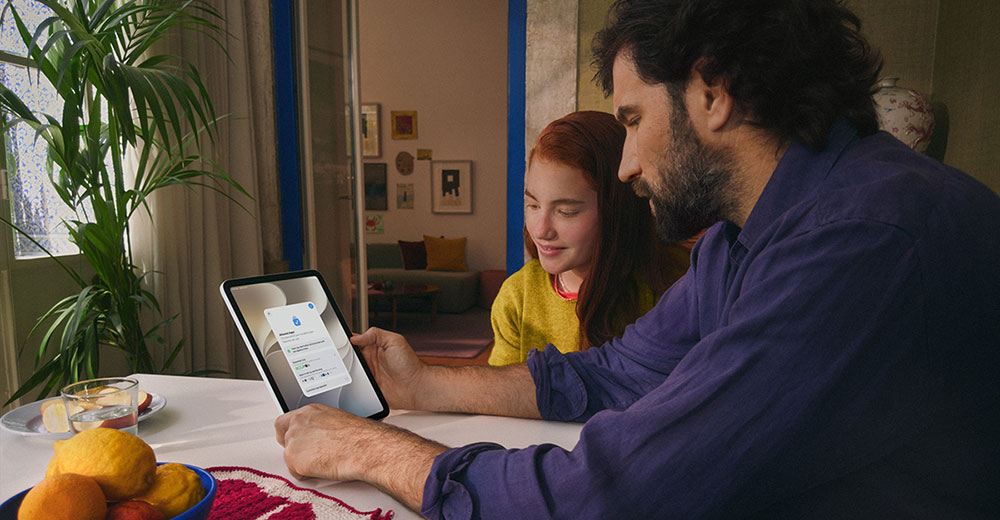
Apple is giving parents granular control over their kids’ content, down to being able to select when, how long, and where they can use a particular application or feature, Enderle explained.
“The problem is, parents haven’t used the controls that they’ve got, so giving parents more controls if they’re not using the controls they’ve got is problematic,” he said. “But at least parents have the option.”
Having parental controls integrated into the platform is a great plus, added McGregor. “Now, whether Apple is using the right algorithms from their ‘experts,’ who knows?” he said.
“It’s a huge challenge once you start trying to regulate people’s access to their devices,” he noted. “I think there are a lot of questions there, and I think that’s still kind of in the development, but I think it’s a good thing.”
The images featured in this article are credited to Apple.
















 Loading ...