Police in Chicago -- and elsewhere in the state of Illinois -- are dramatically expanding the deployment of stealth cameras to catch alleged speeders. The cameras may be a massive invasion of privacy, however, according to some legal experts who are calling for precautions to be taken with the surveillance data.
Recent moves to install such technology in Illinois come as other states are taking action to block its use. Some citizens are taking matters into their own hands, using so-called "photo-blocker" spray to shield themselves from the constitutionally questionable speed traps.
"Chicago must afford some way for those ticketed to say, 'Right car; right license plate; wrong person,'" said Harold Krent, a law professor and dean of the Chicago-Kent College of Law at the Illinois Institute of Technology.
"Chicago needs to embrace a system to determine how long its surveillance images will be kept and to limit access to such images," he added.
Cops of the Future?
The new camera technology is mounted on the roofs of enhanced Chevy Tahoe sport utility vehicles -- with US$85,000 of surveillance accoutrements -- and can scan more than 3,600 vehicles per hour, according to the Chicago Police Department. The SUVs also use thermal imaging technology -- akin to what U.S. troops are using in Iraq -- to track alleged speeders.
Chicago Mayor Richard Daley called the vans the "police cars of the future."
Testing of the SUVs began recently, just as the Illinois State Police debuted their own anti-speeding plan based on high-resolution cameras. The cameras enhance the productivity of troopers who are writing tickets by 16 times, the State Police said.
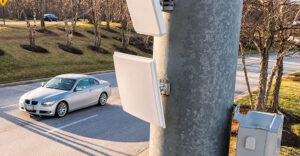
Both surveillance systems merge their information with government computer networks and then send wide-angle images of suspected speeding vehicles and pictures of drivers' faces. They also note the locations of the alleged incidents, the vehicle speeds and the posted speed limits.
Illinois government agencies tried to implement traffic surveillance technology nearly 20 years ago, but civil liberties concerns undermined the plan. Last summer in Virginia, meanwhile, legislators shut down a similar program.
The national office of the American Civil Liberties Union has opposed red-light cameras in Washington, D.C., saying the cameras intrude on the constitutionally protected right to privacy.
The cameras shift the burden of proof from government to citizens and unfairly penalize car owners who may not necessarily be red-light runners, according to the ACLU.
Protecting Citizens
A few years ago, valet parking attendants in Chicago were caught illegally parking patrons' cars, leaving car owners no way to fight the tickets, Professor Krent recalled.
"Those ticketed should be able to challenge whether the surveillance machinery had been checked, calibrated, etc.," he argued.
Many red-light camera systems are installed under contracts that give some of the ticket revenue to the contractors. That creates an obvious incentive for contractors to "game" the system to increase revenue, the ACLU said.
There also is concern among civil libertarians that if alleged speeders are rich or famous, those who capture the images could sell them to divorce attorneys or paparazzi.
"Privacy can be damaged more by lax controls on information after it has been collected than through the collection itself," Krent said.
Banned in West Virginia
Recently the West Virginia House of Representatives voted nearly unanimously, 88 to 3, to ban both red-light and speed cameras in the state.
"We continue to receive increasing numbers of sales from motorists there who tell us they are concerned about cameras in nearby states," said Joe Scott of PhantomPlate, maker ofPhotoBlocker spray, being used by motorists there and in other eastern states to combat the invasion of privacy.
The aerosol spray does not alter the appearance of the plate to the unaided eye, but it causes a light effect that renders the number on the plate unreadable. The flash of the red-light camera or speed camera reflects back from the spray, resulting in an image similar to a flash photograph of a mirror.
The company reports sales of over 500,000 cans in 23 countries. Use of the spray has been banned in some states, which may be a testimony to its efficacy.














 Loading ...