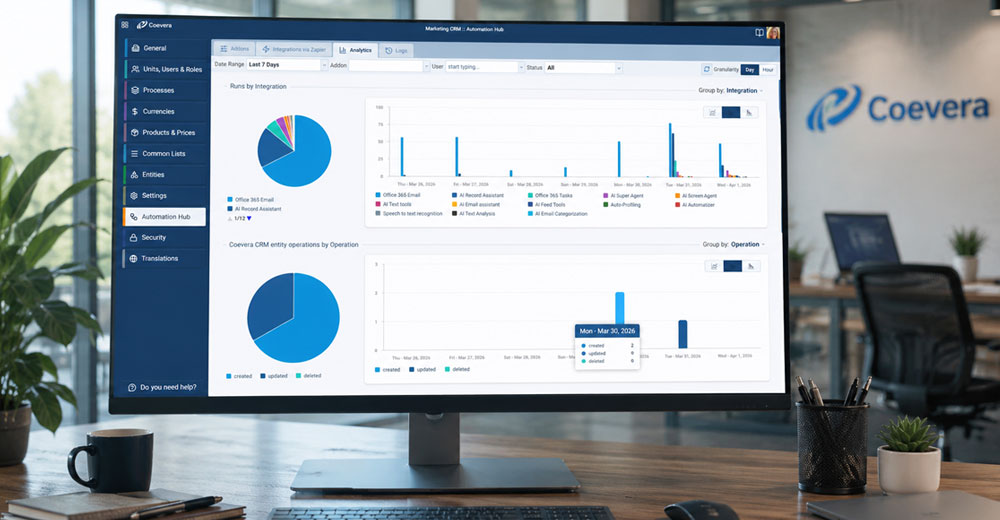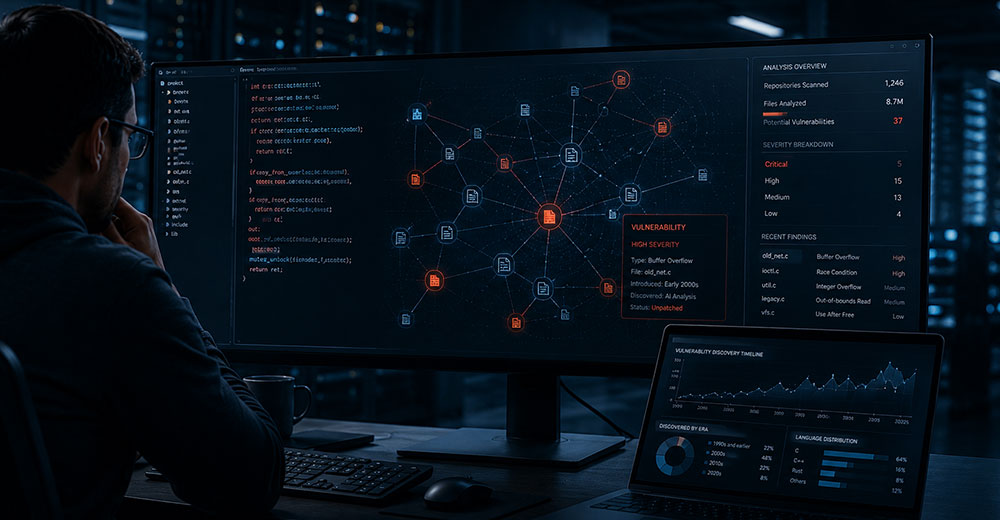
If you judged the AI revolution solely by the stock market, you might conclude that artificial intelligence has already transformed corporate America. A significant portion of this phenomenon can be attributed to financial analysts who prioritize AI infrastructure expansion.
Nvidia has become one of the world’s most valuable companies. Dell Technologies has emerged as one of the biggest winners of the AI infrastructure boom. Hyperscale cloud providers continue to invest hundreds of billions of dollars in AI data centers, while semiconductor companies are enjoying one of the strongest growth cycles in decades.
The investment story is impossible to ignore. What has been less visible is the productivity dividend that those investments are expected to deliver. AI has fueled the largest infrastructure buildout in technology history, yet most companies have not fundamentally changed how work gets done.
Employees are using ChatGPT to summarize meetings, marketing teams are generating first drafts, and developers increasingly rely on coding assistants. Those are meaningful improvements, but they remain incremental rather than transformational. The biggest gains are still ahead.
The next phase of AI adoption will be far more consequential than the infrastructure boom itself, as organizations begin to embed AI directly into business processes rather than simply using it as a conversational assistant. That shift will create new opportunities to reduce costs, improve decision-making, accelerate product development, strengthen customer experiences, and generate incremental revenue.
Ironically, the impact could be even greater for small and medium-sized businesses, which typically have fewer legacy systems, less bureaucracy, and cleaner workflows than their Fortune 500 counterparts.
AI Is Becoming a Digital Coworker
One of the clearest indicators of where enterprise AI is heading comes from the companies developing the technology themselves.
A recent Wall Street Journal article examined how OpenAI, Google, and Anthropic are deploying AI internally. Beyond summarizing meetings and drafting emails, these companies are using AI agents to execute multistep business workflows, with employees supervising, validating, and refining the output.
AI is evolving from a productivity assistant into a digital coworker capable of taking on substantial portions of knowledge work, leaving employees to apply their experience, judgment, and critical thinking where they add the greatest value.
OpenAI Is Removing Organizational Bottlenecks
OpenAI provides one of the clearest examples. The company says nearly every employee — not just software engineers — now uses Codex every week. Originally built to help developers write code, Codex now investigates customer billing issues, builds dashboards, creates product demonstrations, analyzes employee disclosures, and assists legal teams with routine document reviews.
AI eliminates organizational bottlenecks by enabling a single employee to complete work that previously required coordination among multiple departments.
Lawyers still review legal documents, but AI performs much of the initial analysis, allowing legal professionals to focus on higher-value work requiring experience and judgment.
Google Is Scaling Finance Without Scaling Headcount
Google’s finance organization tells a similar story. AI agents now compare vendor invoices against contract terms before employees review exceptions.
According to Google, the system allows finance teams to process roughly five times more invoices without increasing staffing. Even more impressive, Google estimates that the initiative could prevent nearly $200 million in invoice overpayments annually.
AI is freeing finance professionals to investigate anomalies, conduct higher-level audits, and improve the models supporting the business.
Anthropic Illustrates Human and AI Collaboration
Anthropic applies the same philosophy across its marketing operations.
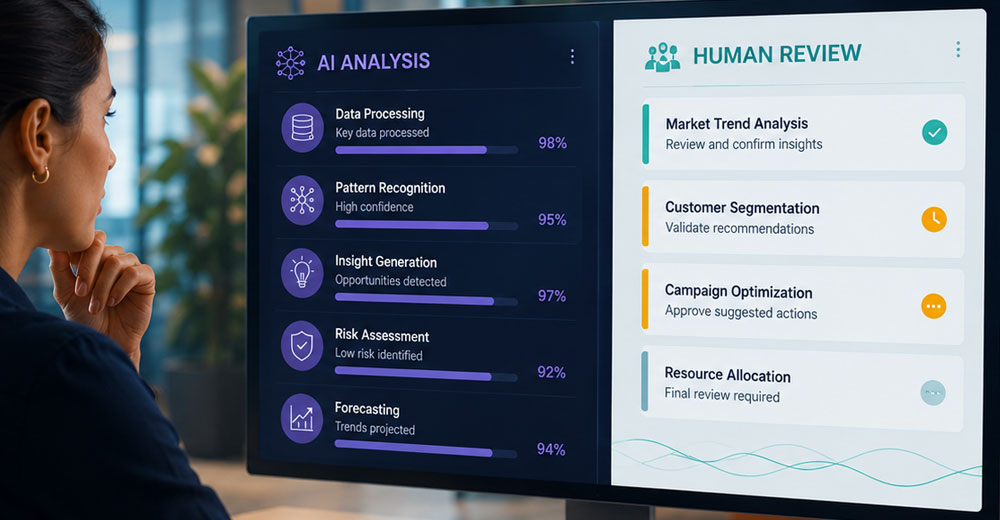
Employees use Claude to automate event creation, campaign management, and repetitive data imports that previously consumed hours of manual effort. One AI agent performs the work while another reviews it before a human approves the final result.
The workflow closely mirrors how many organizations already operate: junior employees prepare work, managers review it, and executives give final approval. AI is fitting into that existing structure rather than replacing it altogether.
Dell Shows Infrastructure Still Matters
While software companies demonstrate how AI changes day-to-day operations, Dell highlights another critical part of the AI economy. Dell has experienced a remarkable resurgence by positioning itself at the center of enterprise AI infrastructure. Its AI-optimized servers, storage platforms, networking portfolio, and integration expertise have become foundational components for organizations building private AI environments and large-scale AI factories.
Only a few years ago, many investors viewed Dell primarily as a mature PC company. Today, enterprise AI has created an entirely new growth engine that has fundamentally changed the company’s trajectory.
Dell also illustrates an important lesson: not every AI winner will build foundation models. Many of the biggest beneficiaries will enable AI rather than create it. Every AI deployment requires servers, storage, networking, cybersecurity, cooling, and systems integration. The companies providing that infrastructure are becoming just as strategically important as the companies developing the AI models themselves.
AI Adoption Is Expanding Across Industries
The companies building AI are hardly alone:
- Microsoft is embedding Copilot throughout sales, engineering, finance, and customer support.
- JPMorgan Chase has expanded AI across investment research, fraud detection, software development, and customer operations.
- Walmart is applying AI to inventory optimization, merchandising, and supply chain management.
- Moderna is accelerating drug discovery and clinical research with AI.
- Industrial leaders such as Siemens and Schneider Electric are using AI to improve predictive maintenance, factory automation, and manufacturing efficiency.
Although these companies operate in very different industries, they share the same objective: using AI as a force multiplier that enables employees to accomplish more with the same resources.
AI Will Change Jobs More Than Replace Them
Few topics generate more debate than the question of whether AI will replace workers. Some displacement is inevitable, particularly for repetitive and highly structured tasks. History, however, suggests that transformative technologies rarely eliminate entire professions. Instead, they reshape how professionals spend their time.
Spreadsheet software did not eliminate accountants. Computer-aided design did not replace architects. Electronic medical records did not make physicians obsolete. Each technology automated routine work while allowing professionals to focus on higher-value responsibilities.
Lawyers will spend less time reviewing contracts, financial analysts less time building spreadsheets, sales teams less time researching prospects, and software developers less time writing repetitive code. The jobs remain, but the work becomes more strategic.
AI may become the greatest productivity amplifier knowledge workers have ever experienced because employees equipped with intelligent assistants will analyze more information, serve more customers, make faster decisions, and complete substantially more work. Companies that successfully combine human judgment with AI automation will almost certainly outperform those that rely on either alone.
Small and Medium Businesses May Benefit the Most
Ironically, the biggest productivity gains may come from outside the Fortune 500, where small and medium-sized businesses often have simpler operations, fewer applications, and less technical debt.
A regional accounting firm, insurance agency, medical practice, or manufacturer can automate scheduling, invoicing, proposal generation, customer communications, and compliance reporting far more quickly than a multinational enterprise burdened by decades of legacy systems.
For these businesses, AI could deliver the equivalent of adding employees without a proportional increase in payroll.
Governance Will Become a Competitive Advantage
The opportunity comes with challenges. The Wall Street Journal noted that Google actually created downstream bottlenecks after dramatically increasing invoice processing because human teams could not keep pace with the volume of discrepancies AI identified.
Gartner estimates the average Fortune 500 company could deploy more than 150,000 AI agents within the next two years, yet only a small percentage believe they have adequate governance in place.
Capturing AI’s full value will require more than deploying new software. Companies must redesign business processes while strengthening governance, accountability, security, and human oversight, all of which will separate AI leaders from AI followers.
The Biggest AI Payoff Still Lies Ahead
The AI revolution is entering its second chapter. The first was defined by GPUs, hyperscale data centers, foundation models, and unprecedented infrastructure investment, which have already reshaped capital markets and created tremendous shareholder value.
The next chapter will be measured very differently. Success will not be determined by how many GPUs a company owns or how many AI models it deploys. It will be measured by lower operating costs, higher employee productivity, faster innovation, stronger customer relationships, and sustainable revenue growth.
The long-term winners will not necessarily be the companies that spend the most on AI. They will be the companies that deliberately and thoughtfully redesign business processes while preserving the uniquely human capabilities technology cannot replicate.
Despite the fear-mongering from some, AI is unlikely to replace entire workforces anytime soon. Instead, it is more likely to supercharge the people who know how to use it effectively. When that happens at scale, the productivity dividend investors have been waiting for may finally rival the infrastructure boom that started it all.










 Loading ...