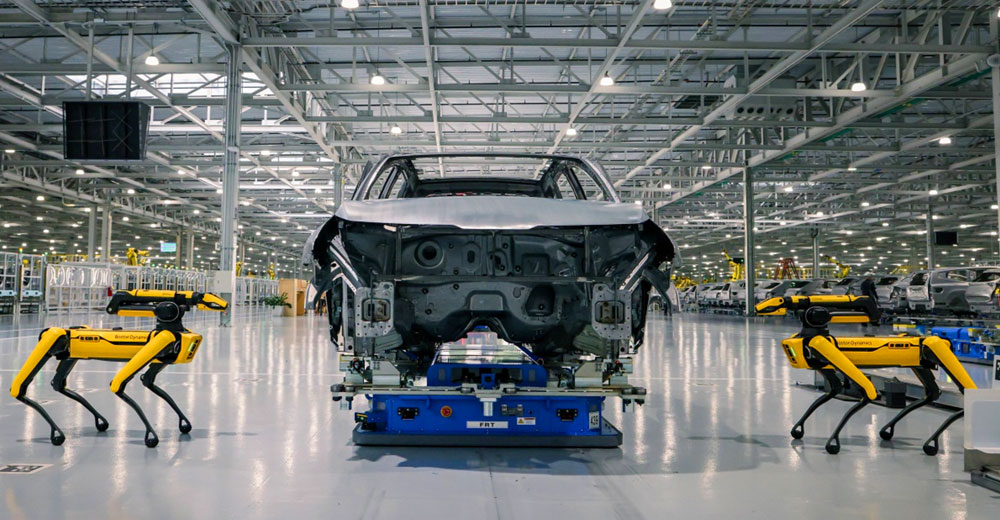
To truly grasp where the technology industry is driving the future of mobility, you have to leave the spreadsheets behind and walk the factory floor. Last week, I traveled to Savannah, Ga., to attend a milestone event at the Hyundai Motor Group Metaplant America (HMGMA). The facility was celebrating the start of production for the Kia Sportage Hybrid, marking its first Kia model and its first hybrid electric vehicle (HEV).
To get a proper feel for the brand’s current trajectory, I navigated the Georgia highways in a borrowed Kia Telluride. It is a remarkable, disruptive three-row SUV that genuinely challenges the luxury segment with its advanced driver assistance features and premium comfort, and I will be doing a comprehensive review of the Telluride in a later column.
Exiting that highly refined Telluride and entering the HMGMA facility felt like stepping into a time machine set for the next era of industrialization. This isn’t just a car plant; it is a sprawling, high-tech robotics laboratory that illustrates how automation will soon transform the entire concept of manufacturing.
Let’s talk about the future of automotive manufacturing this week. Then we’ll close with my Product of the Week: the laptop I carried on my trip to Georgia.
How HMGMA Differs From Tesla and BYD
To understand why this Metaplant is so revolutionary, we must examine the technical differences between HMGMA and facilities run by fierce competitors such as Tesla and BYD.
Tesla revolutionized production through “Gigacasting,” utilizing enormous, high-pressure die-casting machines to form the entire front and rear underbodies of a vehicle as single pieces. This process drastically reduces the part count and speeds up production of a specific model, such as the Model Y.
However, Gigacasting creates extremely rigid factories. If market demand suddenly shifts — say, from full EVs back to hybrids — a Gigafactory cannot easily pivot. Retooling giant casting machines is a slow, capital-intensive nightmare.
BYD, on the other hand, wins through ruthless vertical integration. It manufactures nearly everything in-house, from its proprietary Blade batteries to its own semiconductors, leveraging the large scale and relatively lower labor costs of the Chinese market. BYD’s factories are marvels of volume, but they rely heavily on brute-force scale rather than dynamic agility.
The HMGMA facility uses a fundamentally different architectural philosophy: hyper-flexible manufacturing. The original design of this Metaplant enables the seamless integration of completely different powertrains with minimal modifications. While there, I watched a hybrid combustion system for a Sportage roll down the same line equipped to handle the heavy battery architecture of an all-electric Hyundai Ioniq 5. This flexibility is a profound competitive advantage.
As consumer adoption curves for EVs fluctuate, Kia is not locked into a single powertrain destiny. Its factory can pivot instantly, shielding the company from volatile market shifts that would paralyze a more rigid competitor.
Agentic AI and Build-to-Order Manufacturing
The magic of the Metaplant lies in how it handles robotics, but we must be precise with our terminology here to understand where this is heading. We must clearly distinguish between “automation” and “agentic AI.”
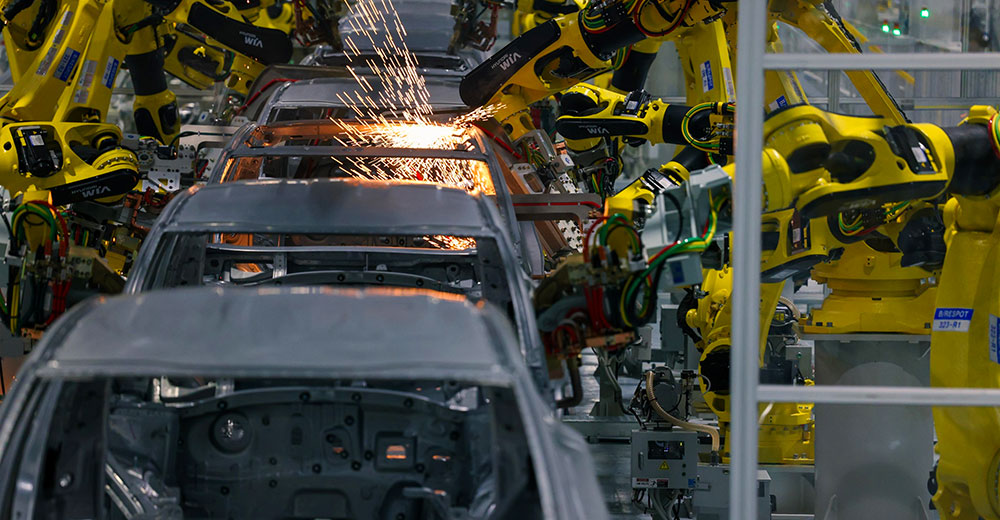
Image Credit: Hyundai Motor Group Metaplant America
Automation is simply the execution layer. It is the robotic arms welding the frame, the autonomous mobile robots (AMRs) silently delivering the Sportage Hybrid to the stage during the ceremony, and the Boston Dynamics robot dogs patrolling the floor for thermal anomalies. These machines are remarkable executors of pre-programmed tasks.
However, the upcoming breakthrough that will revolutionize automotive manufacturing is agentic AI acting as the cognitive layer. Right now, factories still mostly build to projection — guessing what dealers will sell. In the near future, agentic AI will orchestrate the entire supply chain and factory floor in real-time.
A customer will log online, custom-design a vehicle down to the specific battery chemistry, upholstery stitching, and compute modules, and hit “order.” The agentic AI will immediately source the parts, schedule the exact robotic execution sequence, and slot that hyper-customized vehicle onto the line without skipping a beat or slowing down the volume.
True, profitable, mass-scale build-to-order is the holy grail of manufacturing, and agentic AI is the cognitive engine that will make it possible.
20-Year Evolution: From Assembly to 3D Printing
What I witnessed at the Hyundai Metaplant is just the foundation. If we project the current advancements in robotics, additive manufacturing, and artificial intelligence forward, the evolution of automotive manufacturing over the next two decades looks staggering. If these technologies continue advancing at their current pace, the timeline could look something like this.
2026 to 2030: The Rise of the Humanoid and the AMR
Over the next four years, fixed conveyor belts will become entirely obsolete, replaced by AMRs that route vehicles dynamically through the plant based on their specific build requirements. We will also see the widespread integration of bipedal humanoid robots.
Kia and Hyundai are already testing these units to take over high-strain, dexterous tasks that can injure human workers. By 2030, humanoids working alongside human overseers will be the industry standard.
2030 to 2035: The Cognitive Factory
This is the era where agentic AI takes full control of the facility’s logistics. The factory becomes a self-healing, self-optimizing organism. AI-powered predictive maintenance will virtually eliminate unplanned downtime. Build-to-order will emerge as the dominant purchasing model for consumers, heavily reducing the need for sprawling dealer lots filled with unsold inventory.
2035 to 2040: Large-Scale Additive Manufacturing
By the late 2030s, stamping metal will begin to look as antiquated as a blacksmith’s forge. We will see the maturation of large-scale additive manufacturing — industrial 3D printing. Factories will print structural components, interior cabins, and even solid-state battery housings layer by layer using advanced polymers, carbon composites, and specialized metal alloys. 3D printing components on demand will drastically reduce the factory’s physical footprint.
2040 and Beyond: The Raw-to-Finished Paradigm
Within 20 years, plants like HMGMA could effectively become expansive, enclosed 3D printers. The traditional assembly line will disappear. Instead, raw materials — silicon, lithium, carbon fiber, and metal powders — will be fed into one end of the facility.
Inside, swarms of specialized additive manufacturing robots and agentic AI systems will continuously print and assemble the vehicle from the ground up. A fully finished, customized, and charged autonomous vehicle will roll out the other end.
The Human Side of Automation
These technological leaps present an existential threat to the traditional automotive workforce, but they also offer a tremendous opportunity. If workers and companies do not adapt, they will be left behind by this wave of automation.
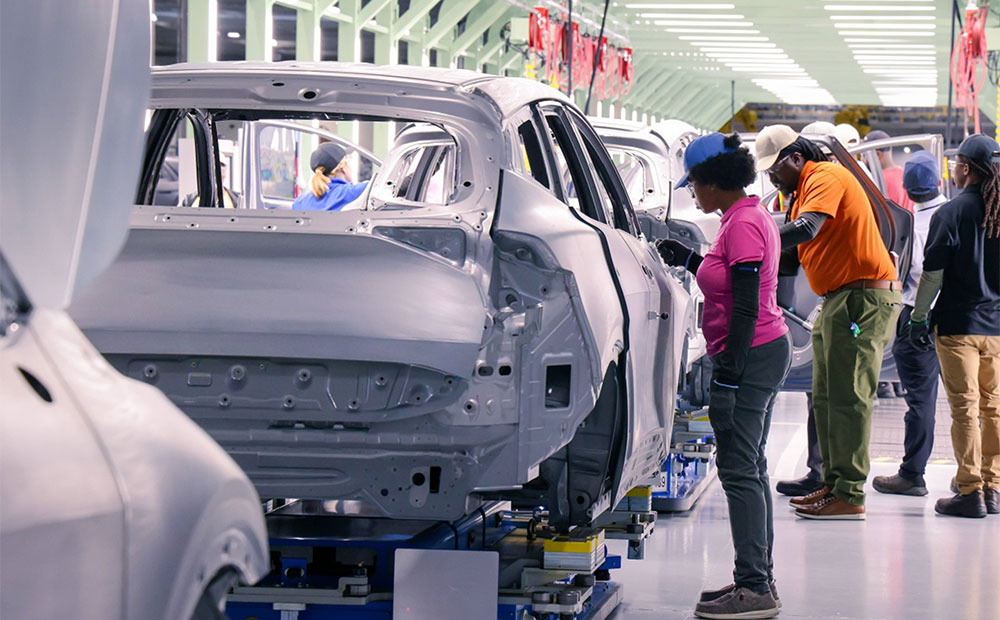
Image Credit: Hyundai Motor Group Metaplant America
For carmakers to maintain a competitive edge, they must treat software and AI engineering with the same reverence they traditionally applied to mechanical engineering. A factory is no longer a hardware asset; it is a physical manifestation of a software platform.
Workers in these facilities will face a permanent shift in the nature of labor. Kia refers to its HMGMA workers as “Meta Pros,” and that title is fitting. The workers of tomorrow will not be valued for their physical strength or their ability to turn a wrench; they will be valued for their cognitive ability to manage complex robotic systems.
To benefit from this evolution, workers must aggressively pursue continuous education in robotics oversight, AI diagnostics, and systems management. State governments and corporate HR departments must provide substantial subsidies for this upskilling. The goal is no longer to be the machine, but to be the intelligent overseer of the machine.
Those who learn to speak the language of agentic AI and robotics will find themselves in high-paying, physically safe, and highly secure careers.
Wrapping Up
The activation of the Hyundai Motor Group Metaplant America is a defining moment in the history of industrial technology. By eschewing the rigid architectures of the past in favor of hyper-flexible manufacturing lines, advanced Boston Dynamics robotics, and the integration of cognitive AI systems, Kia is aggressively positioning itself to survive and thrive in an unpredictable market.
Over the next 20 years, the transition from manual assembly to cognitive orchestration and, ultimately, large-scale 3D printing will completely redefine what a car factory is. Competitors clinging to antiquated, labor-intensive models or rigid casting architectures will find themselves vastly outpaced by companies that can pivot their production with a software update.
The future of manufacturing belongs to the flexible, the automated, and the intelligent. If the Metaplant is any indication of how quickly this transformation is happening, the automotive world is about to look fundamentally different, and those who refuse to evolve will simply be left behind.

HP OmniBook Ultra 14 (2026) With Snapdragon X2 Elite
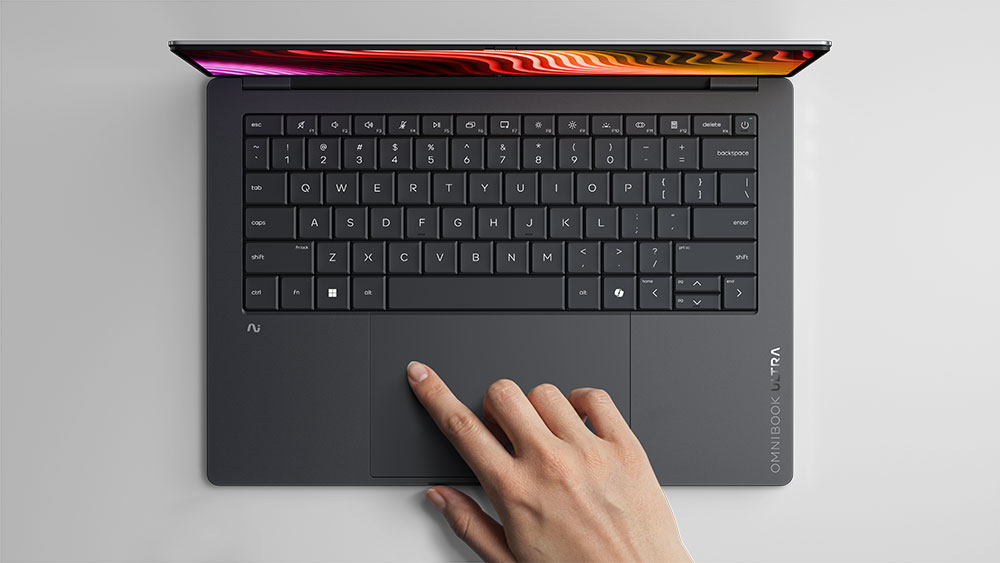
Image Credit: HP
I’ve been testing the new HP OmniBook Ultra 14 (2026) equipped with the Snapdragon X2 Elite (X2E-90-100) processor, 64GB of RAM, and a 2TB SSD. It was the primary machine I brought with me on the trip to Savannah.
As a technology analyst constantly on the move, finding a laptop that doesn’t instantly compromise its performance the second you pull the plug from the wall has historically been an exercise in frustration. Based on my time with this machine and the underlying testing data, that paradigm has officially shifted.
Benchmark data comparing this Snapdragon-powered OmniBook to an otherwise identical model running the Intel Core Ultra X9 388H highlights the architectural advantages of Qualcomm’s silicon for mobile computing.
Battery Life Changes the Equation
On multi-core productivity workloads in “Balanced” mode, the Snapdragon X2 Elite easily outpaces the top-tier Intel chip, pushing well past the 20,000 mark. But the real story — and the reason this laptop is a game-changer for road warriors — is what happens when you run on battery.
The Intel Core Ultra X9 suffers a notable performance cliff on direct current (DC), with its productivity benchmark score plummeting by roughly half. By contrast, the Snapdragon X2 Elite maintains virtually all of its raw processing power when unplugged.
The graphics data tells the same story: The Snapdragon is competitive in plugged-in graphics performance and holds remarkably steady when disconnected, while the Intel iGPU’s performance collapses entirely on battery power. The Intel configuration is better for gaming, but who games on this class of ultra-light laptop?
The OmniBook Ultra 14 provides uncompromised, desktop-class performance in a highly portable 14-inch chassis, whether plugged in at a desk or working from a tray table at 35,000 feet. When you combine that sustained performance with battery playback benchmarks showing the Snapdragon outlasting the Intel configuration by a considerable margin, and a dedicated NPU effortlessly accelerating localized AI workloads without draining the battery, the result is a mobile powerhouse.
Because it delivered exceptional real-world capability, battery life that eliminated my need to carry a charger, and true processing freedom during my factory tour in Georgia, the Snapdragon-powered HP OmniBook Ultra 14 (2026) is my Product of the Week.










 Loading ...