Samsung hosted Galaxy Unpacked on Wednesday simultaneously in Brooklyn, N.Y., where I attended, and London. The event was about more than just unveiling another generation of smartphones. It was a chance for the company to reinforce its leadership in foldable devices just weeks ahead of Apple's expected unveiling of its first foldable iPhone.
With the Galaxy Z Fold8 Ultra, Galaxy Z Fold8, Galaxy Z Flip8, Galaxy Watch Ultra2 and Galaxy Watch9, Samsung has assembled its most mature and comprehensive foldable portfolio to date, while reinforcing its broader vision of AI becoming the foundation of the Galaxy ecosystem.
Samsung largely achieved its goals. The hardware is thinner, lighter, and more refined than ever. Galaxy AI is becoming more integrated across the product lineup, and Qualcomm continues to play a key role in enabling many of Samsung’s newest AI experiences. But the announcements also raised several strategic questions that Samsung will need to answer as foldables competition heats up significantly.
Samsung Expands Its Foldable Portfolio
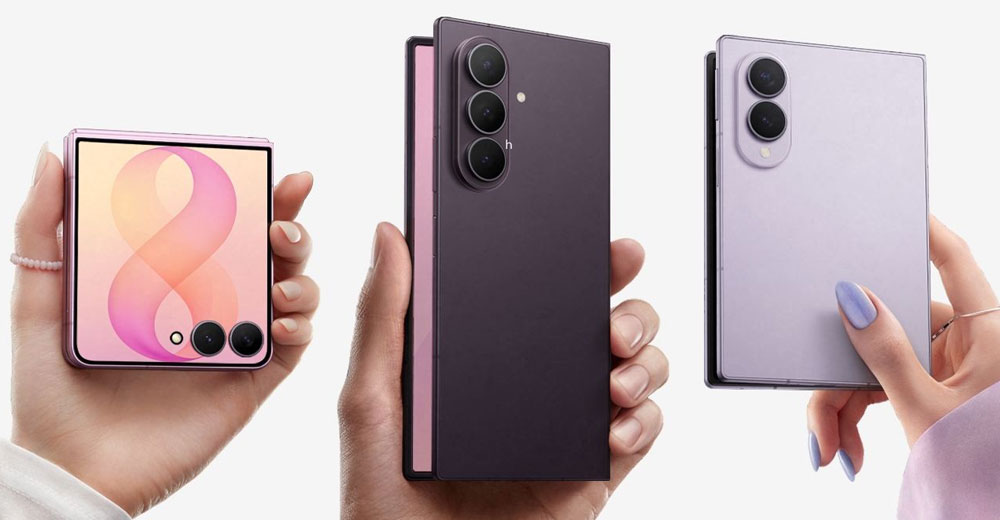
After almost eight years of iterative updates, Samsung’s foldable lineup no longer feels like an experimental category but a complete family of premium smartphones. Rather than offering every customer essentially the same device, Samsung now offers three differentiated experiences.
Galaxy Z Fold8 Ultra is designed for professionals and creators who want the largest screen, the most advanced camera system, and maximum multitasking ability. The Galaxy Z Fold8 is for users who want many of the benefits of a book-style foldable but don’t want to step all the way into Ultra territory. Most notably, its user-friendly aspect ratio (particularly for streaming content) may make it more appealing to a broader audience than the larger Fold8 Ultra.
The Galaxy Z Flip8, meanwhile, continues to appeal to consumers who value portability, fashion and social content creation over maximum productivity. Samsung says this wider portfolio is a natural evolution and recognizes the fact that there is no one foldable experience that works for all consumers.
Samsung deserves credit for continuing to improve the fundamentals that matter most to buyers. The devices are thinner, lighter, more durable, brighter and better optimized for multitasking than in past generations. By themselves, those changes might seem incremental, but together they make today’s foldables feel considerably more refined than the products Samsung was putting out just a few years ago.
Samsung’s Most Important Strategic Partner
While much of the attention was on Samsung’s hardware, one of the biggest was Qualcomm. The partnership between the two companies continues to deepen with Qualcomm’s Snapdragon platforms powering almost every flagship product Samsung introduced.
The Galaxy Z Fold8 Ultra, Galaxy Z Fold8 and some models of Galaxy Z Flip8 will be powered by Snapdragon 8 Elite Gen 5 for Galaxy. Snapdragon Wear Elite debuts in both new Galaxy smartwatches. Qualcomm’s Snapdragon AR1 Gen 1 will also serve as the silicon foundation for Samsung’s upcoming smart eyewear effort with Google.
This partnership extends well beyond a traditional processor supplier relationship. Snapdragon is the computing platform that powers Samsung’s broader AI strategy across smartphones, wearables and future XR devices.
Cristiano Amon, president and CEO of Qualcomm, said, "We are entering a new age of AI, where intelligence is embedded into the personal devices people depend on throughout the day. Qualcomm is powering the latest Galaxy smartphones, watches and intelligent eyewear with Snapdragon, and together with Samsung, we are enabling more natural, context-aware AI across the Galaxy ecosystem."
That reflects a broader industry trend. Performance is no longer just CPU speed or graphics capability. Now silicon vendors are being judged on how well they support intelligent, personalized AI experiences that span multiple devices seamlessly.
AI at the Heart of the Galaxy Experience
Samsung spent a lot of time showing how Galaxy AI is moving from a collection of individual features to an intelligent assistant that helps users proactively throughout the day. Now Brief, Now Nudge and Gemini Intelligence were among the features shown as examples of AI reducing friction by surfacing relevant information, anticipating next steps and helping users complete tasks with fewer interactions.
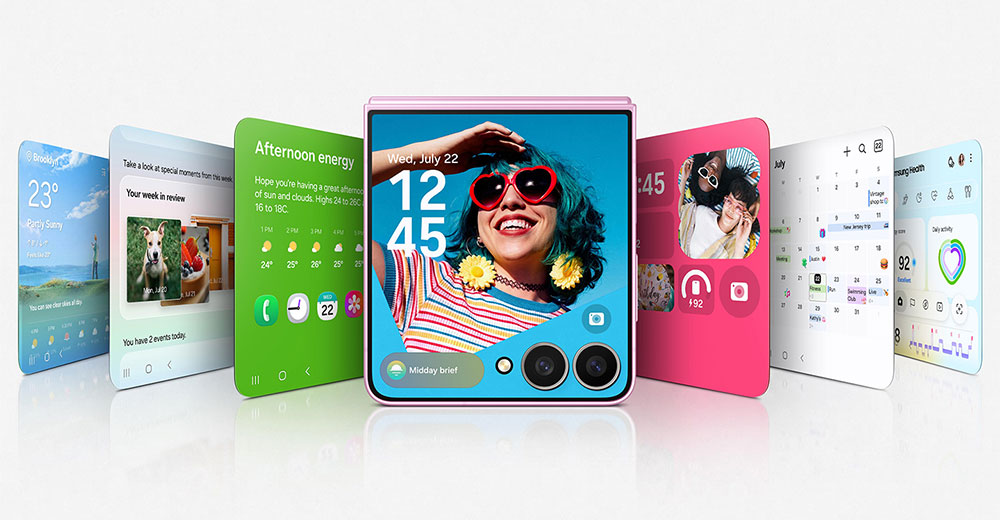
Samsung's Now Brief displays personalized insights and suggested next steps on the Galaxy Z Flip8.
Samsung CEO and Head of the Device eXperience, TM Roh, touched on this broader vision in his keynote when he said, "As AI becomes more agentic, mobile devices will become the most personal gateway to experiences that understand and adapt to each user. We are once again moving the premium mobile experience forward and bringing the next era of intelligence to more people by setting a new standard for foldables."
Rather than viewing AI as an add-on feature, the company now sees it as the operating layer that links phones, watches and soon smart glasses into a cohesive ecosystem.
Premium Price, Premium Expectations
The hardware tweaks are nice, but Samsung’s product segmentation strategy may be one of the more controversial elements of its announcements.
The Galaxy Z Fold8 launches with a starting price of $1,899, positioning it firmly in the ultra-premium smartphone category. At that price point, consumers are entitled to very few concessions. Samsung, however, chose to reserve its best imaging system for the pricier Fold8 Ultra, while the regular Fold8 was equipped with dual 50-megapixel cameras instead of the Ultra’s flagship camera setup.
That decision could prove to be a strategic mistake. Camera quality has become one of the biggest purchase drivers for smartphone shoppers. Many foldable buyers, who can spend upwards of $2,000, will want flagship camera performance no matter which model they choose.
Samsung clearly wanted to make the Fold8 and the Fold8 Ultra more distinct, but it remains to be seen whether consumers will accept that compromise.
This decision is also an interesting benchmark for Apple. If Apple does launch its first foldable phone in September, it will be interesting to see if it adopts a similar segmentation strategy or offers flagship camera performance across its entire foldable lineup. Apple's approach could set expectations for the category among consumers very quickly.
Winning the Hardware Battle Isn't Enough
One thing about Samsung’s presentation that was a little less convincing was its explanation of why foldables fundamentally enhance the everyday smartphone experience.
Samsung demonstrated multitasking, gaming, AI-assisted workflows, and media consumption on larger displays, which are valid advantages. But the company still focused more on features than on explaining why foldables meaningfully improve everyday life for mainstream consumers.
Storytelling is one of Apple’s great strengths. Apple is usually less about engineering feats, and more about showing how technology changes everyday behavior. If Apple does come out with a foldable product this year, expect the company to spend much more time explaining why users would want a foldable device, rather than just explaining what the hardware can do.
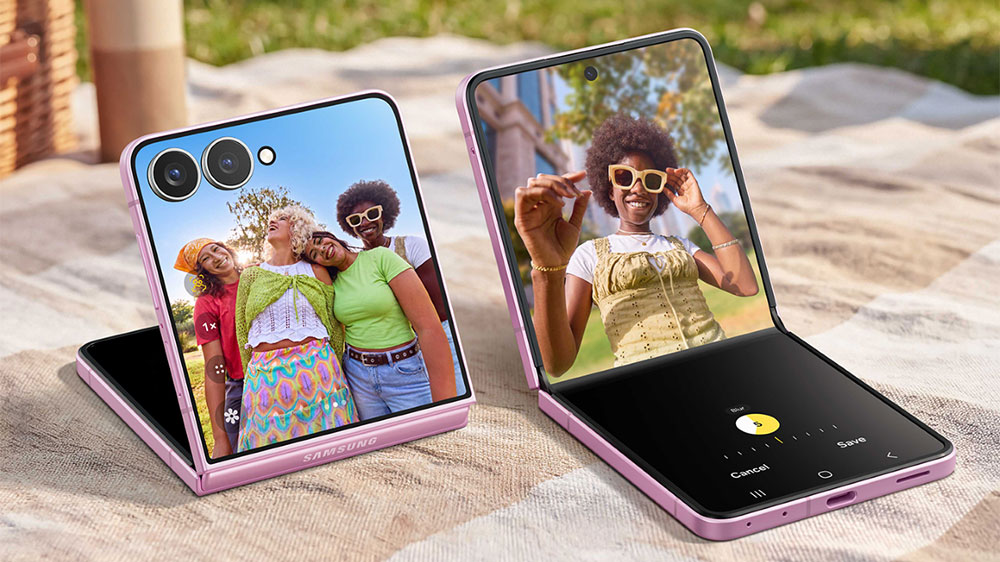
The Galaxy Z Flip8 supports hands-free photography using Flex Mode and the cover screen preview.
Samsung has pretty much won the engineering battle. The next competitive challenge will likely be storytelling and communicating a compelling usage model.
Smartwatches Push Further Into Preventive Health
Foldable smartphones may have stolen the show, but Samsung’s smartwatch announcements were also noteworthy. The Galaxy Watch Ultra2 and Galaxy Watch9 continue Samsung’s shift from basic fitness tracking to proactive health monitoring powered by artificial intelligence.
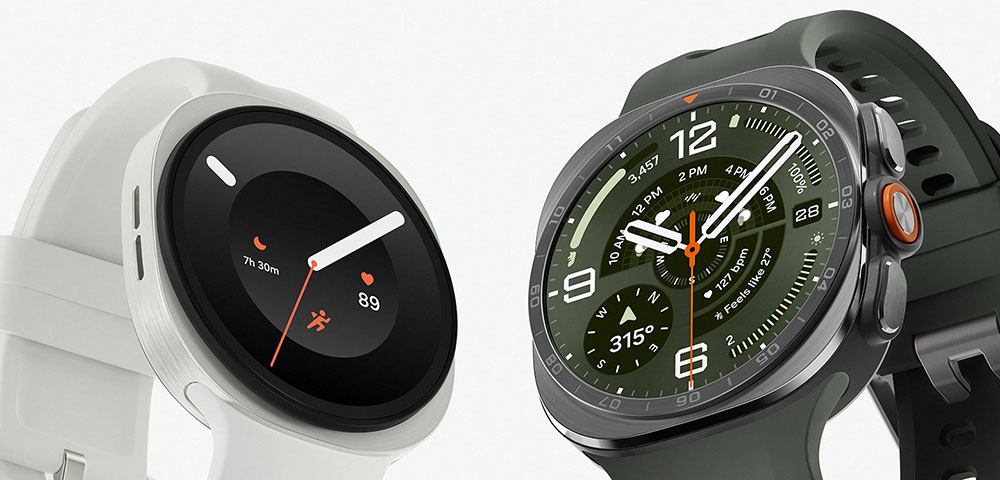
Samsung's Galaxy Watch9 (left) and Galaxy Watch Ultra2 are the company's newest smartwatches.
The Galaxy Watch Ultra2 runs on Qualcomm’s new Snapdragon Wear Elite platform and packs a much larger battery, a brighter 5,000-nit display, better trail running, exclusive diving features developed with Mares, and more advanced AI-driven health insights, among other things. The Galaxy Watch9 carries many of the same processing improvements, but for a more mainstream audience, along with a larger battery and a redesigned Samsung Health experience.
Most notably, Samsung's health ecosystem is beginning to go beyond simple biometric data collection. The new software is designed to read that data, identify trends, and provide recommendations that help users get better over time. That evolution to preventive wellness might be more valuable in the long term than any one hardware spec.
Final Thoughts
Samsung delivered one of its strongest Galaxy Unpacked events in recent years. The company made meaningful improvements across its foldable portfolio, made significant progress on its AI strategy, expanded its smartwatch capabilities and furthered its long-standing strategic partnership with Qualcomm.
The announcements cement Samsung’s leadership in foldables while expanding its connected AI ecosystem across smartphones, wearables and future smart glasses.
The only question remaining is if Samsung has drawn the line too aggressively between the Fold8 and Fold8 Ultra. The $1,899 smartphone with the company’s not-so-great camera system may leave some premium buyers questioning the value proposition, especially if Apple takes a different approach when its expected foldable smartphone arrives later this year.
Even so, Samsung's announcements are an important milestone for the foldable market. The company has demonstrated that the technology is no longer experimental, and if Apple's anticipated September introduction broadens consumer awareness and Samsung continues to refine its hardware, the two companies together may finally provide the momentum this category has needed for years.
The technology is no longer the biggest remaining obstacle. The remaining question is whether consumers will see enough value to justify foldables' premium prices.
It’s your move, Apple.
The images featured in this article are credited to Samsung.









 Loading ...