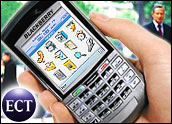
We all know the pun on the BlackBerry name, likening the smartphone to a very addictive and destructive drug. Bad taste and moral issues aside, though, recent research shows that today’s workers are indeed extremely attached to their mobile devices, especially the ones that let users access e-mail and perform other desktop tasks. Plus, workers aren’t using them just on the road anymore.
“A growing proportion of workers use mobile devices while at their workplace,” Michael Osterman, founder of Osterman Research, told TechNewsWorld. “They are not just for traveling or senior management [anymore].”
Have BlackBerry, Will Stay Put
Now that many corporate workers have spent a few years with mobile e-mail access, they rate such access critical to their workdays, according to a survey Osterman Research recently conducted. A whopping 81 percent of senior managers rated mobile messaging important or extremely important, in fact. More than 70 percent of IT staffers felt the same about mobile messaging, and nearly 65 percent of traveling salespeople reported an equal rating.
Most workers, though, have expanded their use of smartphones and mobile productivity devices beyond the realm of e-mail. Among those same senior managers, for example, 85 percent said that mobile access to Outlook is important or extremely important to them.
Thus, more and more, knowledge workers are taking their calendars and project to-do lists on the road — or just down the hall — with them in very small packages. Increasingly, we all see colleagues checking their schedule under the table in meetings or thumb-typing a quick note to themselves during a phone conversation.
Hardware Wars
The situation looks much like the mobile revolution launched by the popularization of the notebook computer. Unfortunately, some of the problems are the same, as well. As during the days of the “hardware wars” over which type of notebook employees would be permitted to purchase, IT groups and the staffers they support increasingly are finding themselves at odds over which mobile devices will be supported by corporate IT groups and which will not.
“Thirty-one percent of organizations have limited the number of mobile devices used because of the extra administrative workload involved in managing mobile devices,” explained Osterman. “The vast majority of organizations support BlackBerry devices and a growing proportion support Windows Mobile, but after that, support drops off for other platforms, such as Palm-based devices and Symbian devices.”
Balancing Supply and Demand
Of course, the introduction of the iPhone adds even another layer of complexity to the problem. While the popular Apple smartphone is aimed at a younger and perhaps less corporate consumer, it remains attractive to managers because it has a full-screen Web browser built in. Among the organizations surveyed by Osterman, 72 percent already had received requests for workers looking to add the iPhone to the list of supported mobile devices. It’s only a matter of time until competitors introduce their own analogs to the iPhone — ones with a more clear business orientation.
The challenge for corporate IT groups, stressed Osterman, will be to balance what workers want and what organizations can afford to support. Already, more than one-third of the 110 medium-sized to large organizations surveyed by Osterman reported that the demand of mobile access have required them to upgrade their servers. About 27 percent of those IT groups reported that supporting mobile devices has increased their workload. Those groups, Osterman noted, will have to continue to limit what workers can use.
“Over the next three years,” Osterman predicted, “BlackBerry will continue to be widely supported, while Windows Mobile will likely achieve about the same level of support. After that, I can see most organizations supporting both platforms, but there will likely be increasing pressure to support just one as users upgrade to newer devices.”














 Loading ...