Don't book that cruise just yet -- the vacation to outer space is a step closer to becoming reality. Virgin Galactic unveiled its White Knight Two carrier this week, starting the countdown to the world's first airline to take tourists to the stars.
White Knight Two -- designed by Burt Rutan and funded by British entrepreneur/adventurer Richard Branson -- is set to carry passengers to near zero-gravity reaches of the skies on Virgin's SpaceShipTwo rocket. The first launch is still months away, but the carrier's completion marks a significant milestone in the journey to public space exploration.
Meet the Mothership
Known as the "mothership," White Knight Two will literally ferry the SpaceShipTwo passenger ship into outer space.
"It's very similar to how the X15 jet flew," David Ritchey, associate director of the Saint Louis Science Center's James S. McDonnell Planetarium, told TechNewsWorld. "It was mounted below the wing of a B-52 bomber and was carried to altitude and released. This is the same concept -- the actual spacecraft rides under the belly of the mothership," he explained.
The WK2, as it's been nicknamed, builds on the original White Knight -- created by Rutan after he won a US$10 million contest to come up with its design. Billed as the world's largest all carbon composite aircraft, the new carrier boasts a 140 foot wingspan and the ability to fly as high as 50,000 feet.
Engineers on Rutan's team will now focus on finishing the actual SpaceShipTwo rocket, said to be about 70 percent complete. In the meantime, WK2 will have to undergo a year of test flights without the spacecraft attached. Those trial runs are set to begin in the fall.
Expensive Expedition
The actual space experience won't be for everyone -- not yet, at least. Initial tickets cost about $200,000 a pop. The ship is designed to carry only six passengers and two pilots per journey, so the wait list has already grown long.
"They're in the infancy of that kind of space exploration," NASA spokesperson Allard Beutel told TechNewsWorld. "The more that [they] do it, the more people that get involved, the more companies that get involved -- the prices will go down, just like commercial airlines back in the 1930s."
Even if prices drop, the per-minute rate will likely remain steep. Virgin Galactic's vacations are slated to deliver only about four minutes of weightlessness before returning to Earth. The cost ultimately comes down to the risk involved -- and the precautions required.
"Space travel and space exploration are just not simple things to do. It's the harshest environment around. There's no margin for error," Beutel explained.
NASA Influence
NASA itself isn't directly involved in the various space tourism projects private businesses have in the works. Its influence, though, is quite apparent in the industry's foundation.
"The tourism industry that's just starting to emerge now is built upon what NASA has done," Beutel pointed out. "Those early steps into space -- that's what NASA was doing back with John Glenn and Alan Shepard. It's a natural offshoot of the space exploration that NASA does."
The tourist trips, of course, will be quite different from actual astronaut experiences. The first tourist crafts won't venture nearly as high into the skies as NASA missions often reach. They will also have a drastically different focus.
"Our astronauts are up there doing actual work. [They] have a fun job to do -- but it's a job," Beutel said.
More Than a Vacation
Even with its limitations, the idea of space tourism is seen as more than just a high-priced vacation. The quickly approaching notion is drawing plenty of excitement from both NASA and the space community.
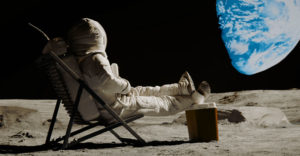
"You just talk to astronauts and they are so changed, having seen the fragile blue Earth against the black background of space," said Ritchey. "They just say that it really grips you in the core to understand the beauty -- that we are just this single little rock out there."
Much like NASA's early exploration, no one really knows where these first tourist flights could lead -- or whether the four-minute treks could turn into four-week stays.
"Whether [tourists are] spending just five minutes in microgravity, or 10 years from now, if there are huge space stations up there that are run by Hilton and Marriott -- I just think that people being able to have that experience is going to have a profound effect on the whole humanity," Ritchey said.













 Loading ...